


Flying in a Winter Wonderland

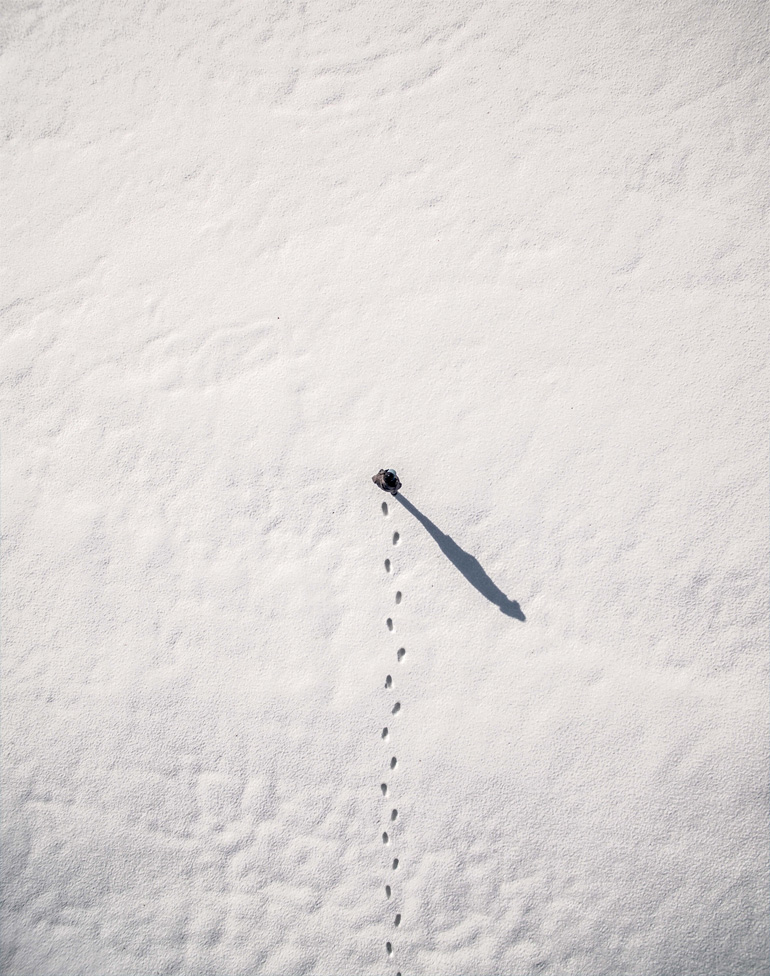
The arrival of winter brings a wide range of conditions that can have both positive and negative effects of drone flight. These crisp conditions offer a unique perspective of the world, creating an opportunity for those ambitious enough to brave the cold. These winter elements create visuals that cannot exist at any other time of the year. A fresh snowfall blankets out detail, causing a smooth and even canvas effect that draws the eye into the subject. Freezing rain and ice storms create forests of crystallized branches, shimmering and shining in the cool winter light. These are conditions that a drone pilot can use to their advantage when shooting photos or video
Winter Conditions & Flight
Before jumping into specific shots and flight details, the most important aspect of flying in the wintertime is to understand how the cold is affecting your drone. It is true that many of these elements also affect other electronics and cameras, so these are general rules that can be applied across the board to all of your gear. Whether you are taking a
The cold weather tends to scare some people into hiding indoors for warmth when in reality there is so much to take advantage of during the winter months. The funny thing about the cold weather is that while it can be uncomfortable and a hassle if you are unprepared, it can actually make your drone faster and more nimble. Cold air is denser, generating more lift to allow your drone to fly with more agility while using less power. The catch is that the cold also can reduce battery capacity and therefore reduce flight time. The battle to keep warm is the inherent conflict with flying in the wintertime. If you can conquer the cold while keeping your drone warm, you can fly as much as you want to
Keeping Batteries Warm
The most important element with winter flight is power. Without it, you are stuck on the ground. Your drone’s lithium-polymer batteries, like most others, function through a chemical reaction. As the temperature drops the chemical reaction slows and becomes less effective, impeding the voltage output. You might have noticed that your batteries heat up as you use them, often being quite warm to the touch when the drone lands. That heat is a natural product of the chemical reaction, and when the temperature outside decreases the battery cannot function as usual. By default, most DJI drones will enter a safety mode when the battery temperature drops below 7°C (44.6°F). This safety mode reduces the top speed of your drone, making it appear more sluggish when in reality this safety mode is activated to protect your drone from the lower voltage output, preventing battery overloading. It’s really quite simple: a warm battery is a happy battery. If you can keep your batteries warm your drone will fly normally

The next step is to physically heat the batteries with an external source. Many DJI drones have optional heating pods that use a small portion of the batteries’ energy to heat themselves. Later models like the Inspire 2 have the ability to heat their own batteries mid-flight. But what if you don’t have one of the heating pods? There are still a couple of tricks to keep you flying. An old method used by camera operators stuck out in the cold is chemical hand and foot warmers. These small fabric packages contain a chemical mixture that will heat up when activated, maintaining warm temperatures for hours. They are super portable and can be found in most sporting goods stores, along with places that sell winter clothing and hunting gear. The best way to use these warmers is to place a few inside the drone case or drone bag, raising the overall temperature inside. These heat packs are exceptionally helpful if you plan to be out in the cold for a few hours
Useful Gear
Beyond batteries, there are a few other handy items of gear to bring with you in the cold. The first is somewhat of a no-brainer but is equally important — warm clothing. There is no point in having the drone winterized if you’re freezing. A good winter coat, boots and gloves are critical if you want to spend any significant time outdoors in the winter. On the note of gloves, it’s a good idea to choose a pair that isn’t too bulky or cumbersome and will still allow you to feel and operate the remote controller. You don’t want to feel like you are wearing an astronaut space suit when trying to press buttons on the controller, so find a pair of gloves that are both warm thin enough to maintain your tactile feel.
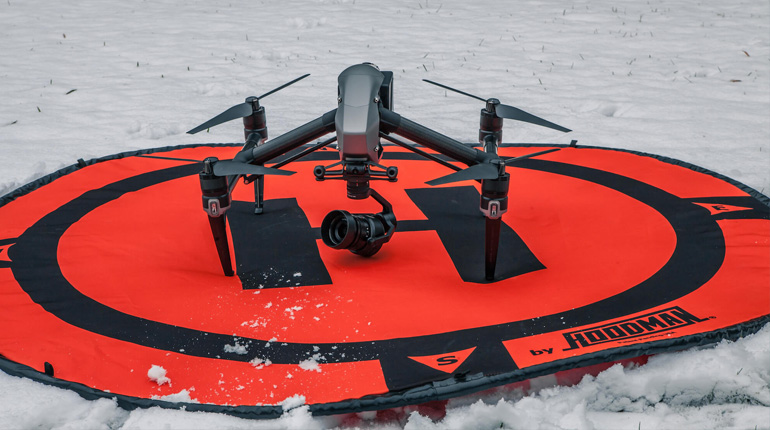
In addition to winter clothing, bringing a snow shovel and landing pad can be quite helpful in deep snow and uneven terrain. Should you find yourself in a field or forest with a deep snowpack, sometimes the easiest solution is to get out a landing pad to go airborne. The landing pad can also be a useful insulator from the ground if you have to set the drone case down. Putting the drone case or bag directly in snow or ice will speed up the temperature decrease inside, chilling any other spare batteries before a flight.
With your preparation complete, your drone batteries will be warm and you have all the gear you need to be out flying for the day. It’s time to take off, right? Not so fast.
When going outside into the cold from a warm building or car it’s always a good idea to give the drone a couple minutes to acclimatize before flying. The rapid temperature change can sometimes cause internal humidity and
Once the drone has acclimatized and you have powered your drone on its good practice to hover your drone over your landing pad or takeoff area for a minute, making sure that the battery voltage levels are holding at a safe and maintained level and that the drone is behaving in a normal and predictable way. You don’t want any surprises when the drone is a
Winter Photography
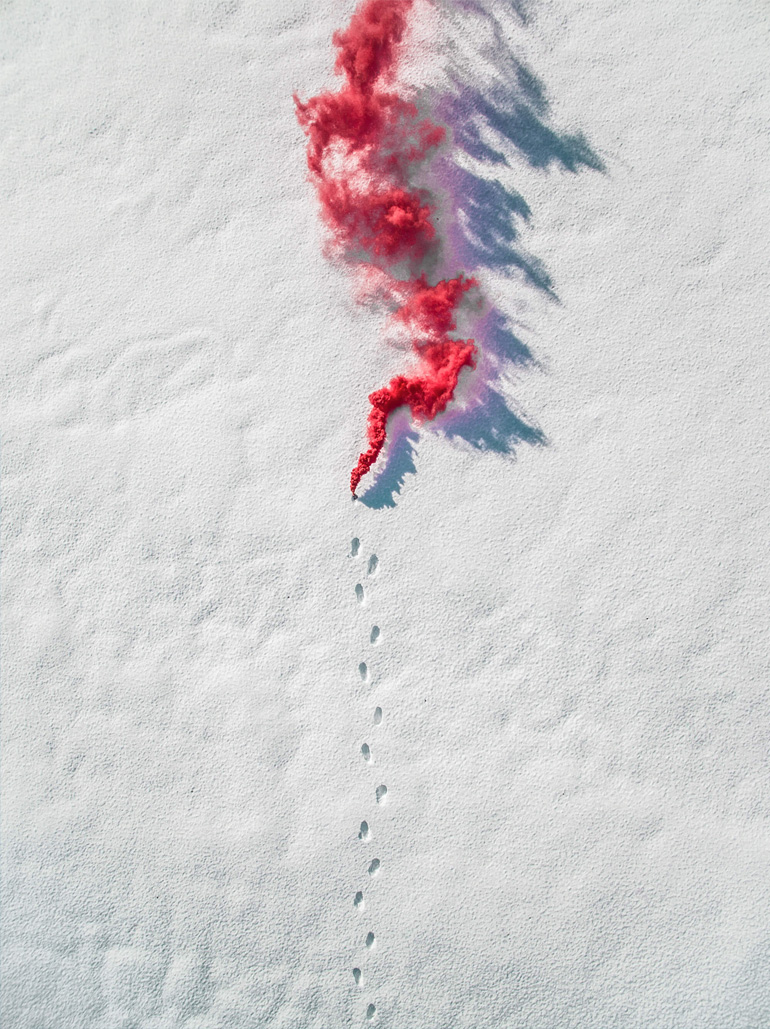
Photography and videography in the winter is a unique experience. The conditions on the ground can vary so much that the same location on different days can appear as entirely different places. Exploring your shot and the areas surrounding it will quickly reveal how the conditions have impacted the terrain. For instance, a fresh snowfall blankets the area removing almost all detail from the ground. It creates a surreal effect similar to a blank white canvas, which can be used to your advantage to draw the eye into your subject. I’ll often place an object in the
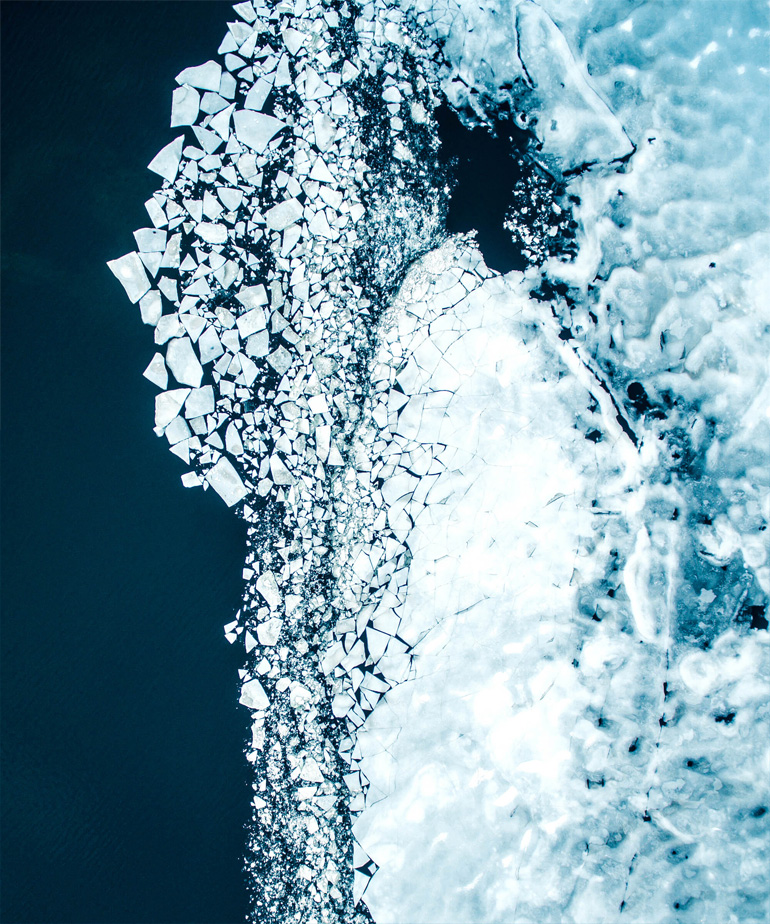
The harsh effects of winter on the terrain can also be a great subject to shoot. Whether it’s snowfall through forests and mountains, or the shape of ice frozen on the surface of the water, the weather conditions can often become the subject. I find that most frozen lakes that appear flat and uninteresting from the ground are actually formed out of many intriguing shapes, intersected by jagged lines when viewing the water surface from the air. The best factor is that nature will never repeat itself and that no two frozen lakes are the same

When you can adapt to the challenges of winter, the season becomes a wonderland. Think of the chilly conditions as an opportunity to look forward to, not fear. While most people choose to hibernate, you can be outside flying and enjoy this side of Mother Nature to its full potential.